Saturday, September 22, 2012
Monday, September 3, 2012
WESLEYAN FOOTPRINTS: Series puts spotlight on influential Wesleyan grads in sports
“One of the greatest things about Wesleyan,” a coach told me recently, “is that you’re inspired to follow your bliss and go anywhere.”
The Middletown Press presents a new series called “Wesleyan Footprints,” bringing you daily profiles of influential Wesleyan alumni in the world of sports. It’s a chance to retrace the steps of Wesleyan graduates who have made an impact on modern sports.
Enjoy!
-Joe
It’s a long and intriguing success story — one that begins with a harried departure from pre-war France, winds through the Wesleyan University campus in Middletown, climbs to the highest of highs in professional squash, then quietly settles down to a home in Needham, Mass.
This is the story of Henri Salaun.
He’s widely considered one of the world’s most influential squash players, and cut his teeth as a three-sport athlete at Wesleyan in the 1940s.
Salaun, 87, went on to win the inaugural U.S. Open of squash in 1954, earned a bevy of national championships and even adorned the cover of Sports Illustrated in 1958.
Mark Herzlich has a Super Bowl ring with the New York Giants. At Boston College, he was an All-American and defensive player of the year in the ACC.
And the 6-foot-4, 246-pound linebacker might still be the second-best athlete in his family.
That’s because his mother is Barbara Martin Herzlich — generally considered the best female athlete in Wesleyan history.
Read more about Barb.
One century ago, Wesleyan was in a golden age of athletics.
Not only was quarterback Everett Bacon changing football with the forward pass, but a talented young hurdler named James Wendell was making history.
Wendell, like Bacon, was in the midst of his two-time All-American career. He won a national championship in high hurdles as a senior and five New England hurdles titles.
Bill Rodgers was a good runner when he first came to Wesleyan in 1966. But he wasn’t great — not yet.
It was a combination of his own ambition and some inspired coaching that turned Rodgers into “Boston Billy,” one of America’s greatest and most recognizable distance runners of all time.
Rodgers won four Boston Marathons, four New York Marathons and set an American marathon record in the process. He was named world’s best marathoner three times in the 1970s by Track & Field News, and today is a member of the National Track & Field Hall of Fame and National Distance Running Hall of Fame.
As a dynamic scorer and captain for the men’s soccer team, Houghton “Buck” Freeman had a splendid athletic career at Wesleyan.
Still, his athletic prowess pales in comparison to the impact he had on the university decades after graduation.
His name will forever be attached to the Freeman Athletic Center, toward which he donated $5 million in 1988. He later helped create the Freeman Asian Scholars Program, which provides full scholarships for native Asians to complete a degree program at Wesleyan.
One hundred years after Everett Bacon graduated from Wesleyan, the memories
have, sadly, begun to fade.
There’s the Bacon Field House at Wesleyan, named in his honor. There are a few pictures scattered around campus. But they barely do justice to the two-time All-American and pioneer of football’s forward pass.
Read more about Ev here.
In the soundtrack to Ambrose Burfoot’s life, there is but one track.
It’s a rhythmic padding — something like worn-down sneakers on pavement. And it never stops.
Listen closely and you can hear it during his freshman year at Wesleyan, when he stole off to run the 1964 Boston Marathon without telling his cross country coach.
You can hear it four years later, when Burfoot became the first collegian to win that same race.
Henri Salaun '49: France native overcame WWII obstacles, found squash fame
This is the story of Henri Salaun.
He’s widely considered one of the world’s most influential squash players, and cut his teeth as a three-sport athlete at Wesleyan in the 1940s.
Salaun, 87, went on to win the inaugural U.S. Open of squash in 1954, earned a bevy of national championships and even adorned the cover of Sports Illustrated in 1958.
But like so many people of his era, Salaun’s life wasn’t shaped by sports. It was shaped by World War II.
Barbara Martin Herzlich '81: Field hockey star met all goals
And the 6-foot-4, 246-pound linebacker might still be the second-best athlete in his family.
That’s because his mother is Barbara Martin Herzlich — generally considered the best female athlete in Wesleyan history.
Read more about Barb.
James Wendell '13: Olympian was world-class hurdler at Wesleyan
Not only was quarterback Everett Bacon changing football with the forward pass, but a talented young hurdler named James Wendell was making history.
Wendell, like Bacon, was in the midst of his two-time All-American career. He won a national championship in high hurdles as a senior and five New England hurdles titles.
Bill Rodgers '70: Marathoner's elite career forged at Wesleyan
It was a combination of his own ambition and some inspired coaching that turned Rodgers into “Boston Billy,” one of America’s greatest and most recognizable distance runners of all time.
Rodgers won four Boston Marathons, four New York Marathons and set an American marathon record in the process. He was named world’s best marathoner three times in the 1970s by Track & Field News, and today is a member of the National Track & Field Hall of Fame and National Distance Running Hall of Fame.
Bill Belichick '75: Patriots coach keeps Wesleyan family in mind
“As the year’s go on, his contributions have never been stronger,” freshly retired athletic director John Biddiscombe said. "Just a really loyal guy. He’s an active recruiter for football, talks with [football coach and current AD Mike Whalen] and helps with fundraising.”
Houghton 'Buck' Freeman '43: Alum left indelible mark on campus
Still, his athletic prowess pales in comparison to the impact he had on the university decades after graduation.
His name will forever be attached to the Freeman Athletic Center, toward which he donated $5 million in 1988. He later helped create the Freeman Asian Scholars Program, which provides full scholarships for native Asians to complete a degree program at Wesleyan.
Everett Bacon '13: Wesleyan's football pioneer
There’s the Bacon Field House at Wesleyan, named in his honor. There are a few pictures scattered around campus. But they barely do justice to the two-time All-American and pioneer of football’s forward pass.
Read more about Ev here.
Ambrose Burfoot '68: A running student, savant
It’s a rhythmic padding — something like worn-down sneakers on pavement. And it never stops.
Listen closely and you can hear it during his freshman year at Wesleyan, when he stole off to run the 1964 Boston Marathon without telling his cross country coach.
You can hear it four years later, when Burfoot became the first collegian to win that same race.
And you can even hear it presently, as Burfoot works as editor-at-large at Runner’s World Magazine.
Kathryn Keeler '78: Wesleyan's golden girl
Wesleyan women’s crew was about to race for a national championship in Philadelphia in 1978, and coach Pat Callahan was giving his team some last-minute guidance.
Keeler, a senior, turned to her coach and smiled. “Don’t worry, Pat. We’re going to win.”
And just like that, they did.
Jed Hoyer '96: Cardinals pitcher found success in front office
Jed Hoyer could pitch. He could catch. He could play left field, shortstop, third base and second base.
And the 1996 Wesleyan graduate could do it all at the highest level.
It comes as no surprise, former teammate and current Wesleyan baseball coach Mark Woodworth said, that he does just as well playing the front office.
Hoyer is now the executive vice president and general manager of the Chicago Cubs, working under former Red Sox GM Theo Epstein, now the Cubs’ president of baseball operations.
Read more about Jed.And the 1996 Wesleyan graduate could do it all at the highest level.
It comes as no surprise, former teammate and current Wesleyan baseball coach Mark Woodworth said, that he does just as well playing the front office.
Hoyer is now the executive vice president and general manager of the Chicago Cubs, working under former Red Sox GM Theo Epstein, now the Cubs’ president of baseball operations.
Thursday, August 23, 2012
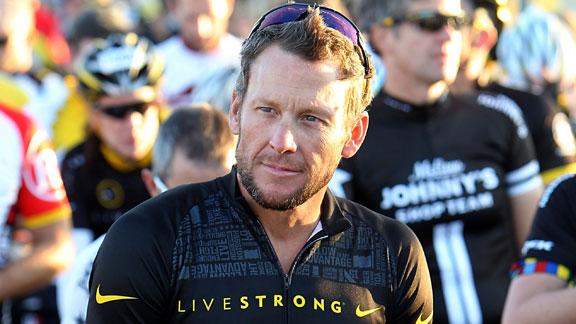
Lance Armstrong's full statement: I'm 'finished with this nonsense'
Full statement issued Thursday night by 7-time Tour de France winner Lance Armstrong:
"There comes a point in every man's life when he has to say, "Enough is enough." For me, that time is now. I have been dealing with claims that I cheated and had an unfair advantage in winning my seven Tours since 1999. Over the past three years, I have been subjected to a two-year federal criminal investigation followed by Travis Tygart's unconstitutional witch hunt. The toll this has taken on my family, and my work for our foundation and on me leads me to where I am today - finished with this nonsense.
I had hoped that a federal court would stop USADA's charade. Although the court was sympathetic to my concerns and recognized the many improprieties and deficiencies in USADA's motives, its conduct, and its process, the court ultimately decided that it could not intervene.
If I thought for one moment that by participating in USADA's process, I could confront these allegations in a fair setting and - once and for all - put these charges to rest, I would jump at the chance. But I refuse to participate in a process that is so one-sided and unfair. Regardless of what Travis Tygart says, there is zero physical evidence to support his outlandish and heinous claims. The only physical evidence here is the hundreds of controls I have passed with flying colors. I made myself available around the clock and around the world. In-competition. Out of competition. Blood. Urine. Whatever they asked for I provided. What is the point of all this testing if, in the end, USADA will not stand by it?
From the beginning, however, this investigation has not been about learning the truth or cleaning up cycling, but about punishing me at all costs. I am a retired cyclist, yet USADA has lodged charges over 17 years old despite its own 8-year limitation. As respected organizations such as UCI and USA Cycling have made clear, USADA lacks jurisdiction even to bring these charges. The international bodies governing cycling have ordered USADA to stop, have given notice that no one should participate in USADA's improper proceedings, and have made it clear the pronouncements by USADA that it has banned people for life or stripped them of their accomplishments are made without authority. And as many others, including USADA's own arbitrators, have found, there is nothing even remotely fair about its process. USADA has broken the law, turned its back on its own rules, and stiff-armed those who have tried to persuade USADA to honor its obligations. At every turn, USADA has played the role of a bully, threatening everyone in its way and challenging the good faith of anyone who questions its motives or its methods, all at U.S. taxpayers' expense. For the last two months, USADA has endlessly repeated the mantra that there should be a single set of rules, applicable to all, but they have arrogantly refused to practice what they preach. On top of all that, USADA has allegedly made deals with other riders that circumvent their own rules as long as they said I cheated. Many of those riders continue to race today.
The bottom line is I played by the rules that were put in place by the UCI, WADA and USADA when I raced. The idea that athletes can be convicted today without positive A and B samples, under the same rules and procedures that apply to athletes with positive tests, perverts the system and creates a process where any begrudged ex-teammate can open a USADA case out of spite or for personal gain or a cheating cyclist can cut a sweetheart deal for themselves. It's an unfair approach, applied selectively, in opposition to all the rules. It's just not right.
USADA cannot assert control of a professional international sport and attempt to strip my seven Tour de France titles. I know who won those seven Tours, my teammates know who won those seven Tours, and everyone I competed against knows who won those seven Tours. We all raced together. For three weeks over the same roads, the same mountains, and against all the weather and elements that we had to confront. There were no shortcuts, there was no special treatment. The same courses, the same rules. The toughest event in the world where the strongest man wins. Nobody can ever change that. Especially not Travis Tygart.
Today I turn the page. I will no longer address this issue, regardless of the circumstances. I will commit myself to the work I began before ever winning a single Tour de France title: serving people and families affected by cancer, especially those in underserved communities. This October, my Foundation will celebrate 15 years of service to cancer survivors and the milestone of raising nearly $500 million. We have a lot of work to do and I'm looking forward to an end to this pointless distraction. I have a responsibility to all those who have stepped forward to devote their time and energy to the cancer cause. I will not stop fighting for that mission. Going forward, I am going to devote myself to raising my five beautiful (and energetic) kids, fighting cancer, and attempting to be the fittest 40-year old on the planet."
Friday, August 17, 2012
PICS: Oddfellows Playhouse Rubber Chicken Run 5k
MIDDLETOWN — The second annual Rubber Chicken Run drew 225 runners and raised about $7,000 for Oddfellows Playhouse Thursday at Mercy High School.
The 5K drew runners from around Connecticut, and the winner was Vernon’s Brian Nelson (17:12).
Race proceeds go to Oddfellow’s scholarship fund and building maintenance. The race began last year after a roof collapse on Main Street destroyed many of the theater’s props.
The top female finisher was Bristol’s Brittany Heniger (20:50).
Check out a whole bunch of pics from Catherine Avalone below!
The 5K drew runners from around Connecticut, and the winner was Vernon’s Brian Nelson (17:12).
Race proceeds go to Oddfellow’s scholarship fund and building maintenance. The race began last year after a roof collapse on Main Street destroyed many of the theater’s props.
The top female finisher was Bristol’s Brittany Heniger (20:50).
Check out a whole bunch of pics from Catherine Avalone below!
Subscribe to:
Posts (Atom)